

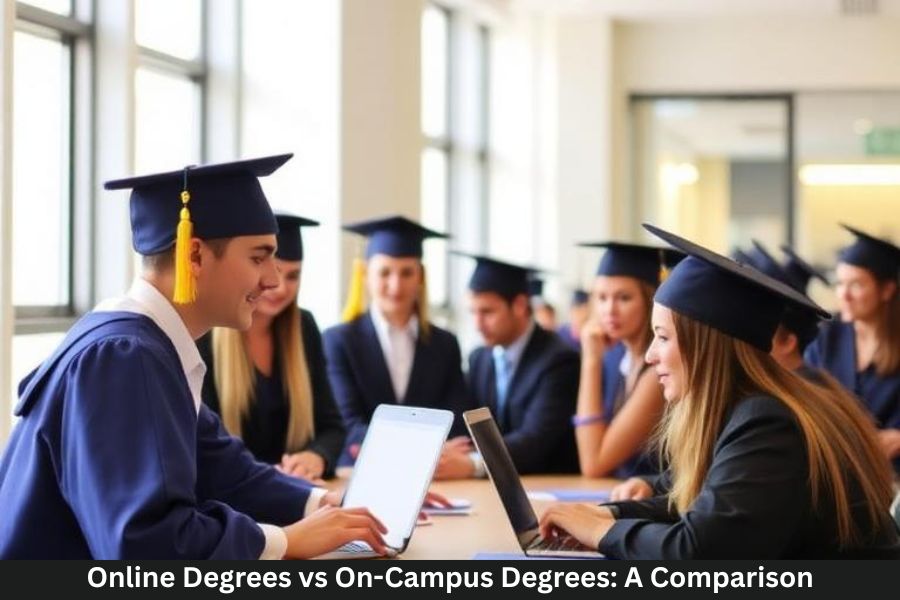
Higher education isn’t what it used to be—and that’s not a bad thing. Gone are the days when earning a degree meant only sitting in a lecture hall with a notebook and pen. Today, students can choose between online degrees and on-campus degrees, each offering its own unique advantages. But how do you decide which one is right for you?
Let’s break it down in plain English, without the fluff, so you can make a smart and confident choice.
The Evolution of Learning Models
Education has evolved much like technology. Just as smartphones replaced bulky phones, online education has transformed how knowledge is delivered. With high-speed internet and advanced learning platforms, earning a degree online is no longer a second-best option—it’s a mainstream choice.
Why This Comparison Matters Today
Whether you’re a working professional, a recent high school graduate, or someone looking to switch careers, choosing the right learning format can shape your future. Understanding the differences helps you invest your time, money, and energy wisely.
Understanding Online Degrees
What Is an Online Degree?
An online degree is an academic qualification earned primarily through the internet. Lectures, assignments, discussions, and even exams are conducted online, allowing students to study from virtually anywhere.
Types of Online Degree Programs
Fully Online Programs
These programs are 100% remote. You can attend lectures in your pajamas, submit assignments digitally, and interact with classmates through discussion boards or video calls.
Hybrid and Blended Programs
Hybrid programs combine online coursework with occasional on-campus sessions. Think of it as the best of both worlds—flexibility with a touch of traditional learning.
Understanding On-Campus Degrees
What Is an On-Campus Degree?
An on-campus degree requires students to attend classes physically at a college or university. This traditional model emphasizes in-person instruction, campus activities, and direct interaction with faculty.
Traditional Academic Structure
Classroom Learning
Face-to-face lectures allow real-time discussions, immediate feedback, and spontaneous questions. It’s like learning with a live audience rather than watching a recording.
Campus-Based Resources
Libraries, labs, sports facilities, and study centers are all part of the on-campus experience, offering resources that go beyond textbooks.
Flexibility and Convenience
Time Management in Online Learning
Online degrees are incredibly flexible. You can study early in the morning, late at night, or during lunch breaks. This makes them ideal for working professionals, parents, or anyone juggling multiple responsibilities.
Fixed Schedules in On-Campus Learning
On-campus programs follow a structured timetable. While this limits flexibility, it also creates routine, which some students find motivating and easier to manage.
Cost Comparison
Tuition Fees and Hidden Costs
Online degrees often have lower tuition fees. Plus, you save on housing, commuting, and campus-related expenses. However, there may be costs for software, technology, or proctored exams.
Living Expenses and Commuting Costs
On-campus degrees can be more expensive due to accommodation, transportation, and meal plans. These costs add up quickly, especially in big cities.
Learning Experience and Teaching Methods
Digital Learning Tools and Platforms
Online learning uses videos, quizzes, interactive modules, and virtual simulations. It’s like Netflix for education—on-demand and personalized.
Face-to-Face Interaction and Engagement
On-campus learning thrives on human interaction. Group discussions, live debates, and hands-on activities can deepen understanding and engagement.
Social Interaction and Networking
Virtual Communities and Online Networking
Online students connect through forums, social media groups, and virtual events. While different from campus life, meaningful relationships can still form.
Campus Life and Peer Connections
Campus life offers clubs, events, and casual hangouts. These experiences help build lifelong friendships and professional networks.
Academic Support and Resources
Online Student Support Services
Most online programs offer virtual tutoring, academic advising, and tech support. Help is usually just a click away.
On-Campus Academic Facilities
On-campus students benefit from physical libraries, labs, and face-to-face support services that can enhance learning.
Career Opportunities and Employer Perception
How Employers View Online Degrees
Today, employers care more about skills and accreditation than learning format. Degrees from reputable online institutions are widely accepted.
Reputation of Traditional Degrees
On-campus degrees still carry prestige, especially from well-known universities. In some fields, traditional education may hold an edge.
Skill Development
Self-Discipline and Time Management
Online learning builds independence. You learn to manage your time, stay motivated, and meet deadlines without constant supervision.
Communication and Teamwork Skills
On-campus programs emphasize teamwork and verbal communication through group projects and presentations.
Accessibility and Inclusivity
Education Without Borders
Online degrees remove geographical barriers. Students from remote areas or different countries can access quality education.
Physical Accessibility of Campuses
On-campus learning may be challenging for individuals with disabilities or those living far from universities.
Technology Requirements and Challenges
Internet and Device Dependence
Online learning depends heavily on reliable internet and devices. Technical issues can disrupt learning if not managed well.
Infrastructure of Physical Campuses
On-campus programs rely on physical infrastructure, which can sometimes limit access during emergencies or disruptions.
Assessment and Examination Methods
Online Exams and Assignments
Online assessments often include open-book exams, quizzes, and project-based evaluations, focusing on practical understanding.
In-Person Exams and Practical Assessments
On-campus exams are usually supervised and may include lab work or hands-on evaluations.
Which Option Is Right for You?
Matching Learning Style and Lifestyle
If you value flexibility and independence, online learning may suit you. If you thrive on structure and social interaction, on-campus learning could be better.
Career Goals and Personal Circumstances
Your career path, financial situation, and personal responsibilities should guide your decision.
Future of Higher Education
Rise of Digital Education
Online education is growing rapidly, driven by technology and global connectivity.
The Continued Value of Campus Learning
Despite digital growth, campus education remains valuable for hands-on learning and immersive experiences.
Conclusion
Choosing between an online degree and an on-campus degree isn’t about which is better—it’s about which is better for you. Both paths lead to knowledge, skills, and career opportunities. Think of it like choosing between a manual and an automatic car. Both will get you to your destination; the best choice depends on how you like to drive.
Frequently Asked Questions
1. Are online degrees respected by employers?
Yes, especially if they are from accredited institutions. Employers focus more on skills and experience.
2. Is an online degree easier than an on-campus degree?
Not necessarily. Online degrees require strong self-discipline and time management.
3. Can I switch from online to on-campus learning later?
Many institutions allow transfers, but policies vary by university.
4. Which option is more affordable overall?
Online degrees are generally more cost-effective due to lower living and commuting expenses.
5. Do online students get the same degree certificate?
In most cases, yes. The certificate usually does not specify the learning format.